Discover patterns and automate workflows without lifting a finger
Liminal represents a new approach to automated workflows - one where agents discover, assemble, and deploy themselves based on how you and your organization actually work.
The foundational challenges with current
automation frameworks
Agentic AI should be driving measurable productivity gains across enterprises. Instead, most organizations are stuck in a cycle of investment without impact.
Why? Three structural problems that compound on each other:

The prediction > proof problem
Most AI initiatives are top-down. The people building agentic workflows aren't the employees doing the work. Mapping every workflow is untenable, so prediction becomes the default—without proof of actual value. The result: agents that don't match how work actually happens.

The technical
translation gap
Even when organizations identify what needs automating, someone has to translate real-world workflows into technical specs, integrate across a dozen enterprise systems, and maintain it all. Technical teams are already stretched thin and lack the bandwidth.

The non-adaptive workflow trap
Whether pre-built or custom-designed, agents force everyone into the same process. But your support rep triages differently than their colleague. Your analyst has a unique research methodology. Generic doesn't scale to individual working styles.

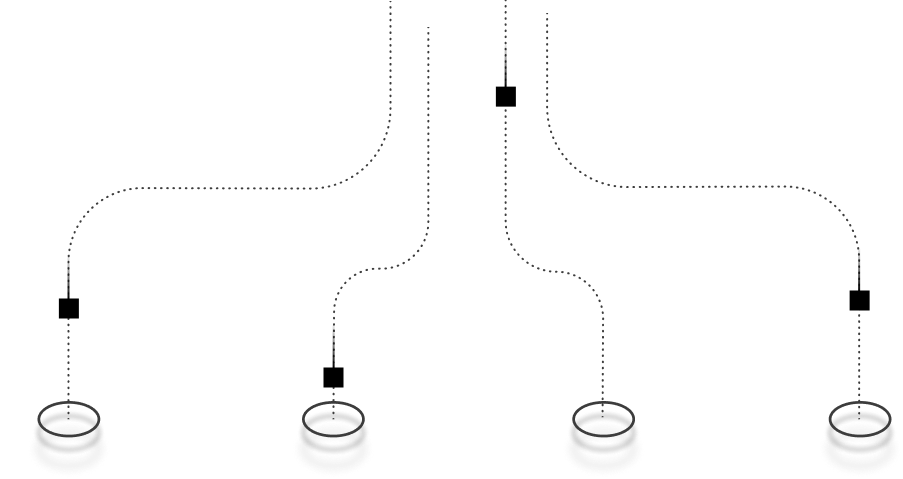
1 : The prediction > proof problem

2 : The technical translation gap

3 : The non-adaptive workflow trap
These aren't isolated challenges. They're symptoms of how traditional agentic solutions require you to build agents before truly understanding the work they're meant to do.
Stop guessing. Start observing.
Eliminate the guesswork by observing how work actually happens, uncovering what's truly worth automating, and allowing agents to emerge from that intelligence.
Right now, your organization is generating signals about what should be automated.
The question asked 340 times across different teams. The document queried whenever a specific decision needs to be made. The workflow run manually every single day. The process that always follows the same five steps.
This is behavioral intelligence—and it's the most reliable indicator of what's worth automating.
But here's the problem: without the right infrastructure in place, it's invisible. Every repetitive task, every hidden inefficiency, every automation opportunity—it all happens without any system capturing it, learning from it, or acting on it.
Behavioral Agent Automation Platforms transform behavioral intelligence into self-assembling agents
Behavioral Agent Automation Platforms (BAAPs) take a fundamentally different approach: instead of asking organizations what to automate, they observe how work actually happens. BAAPs capture patterns in how teams use AI, access internal knowledge, and execute workflows, then surface automation opportunities hidden in those patterns and deploy agents automatically.
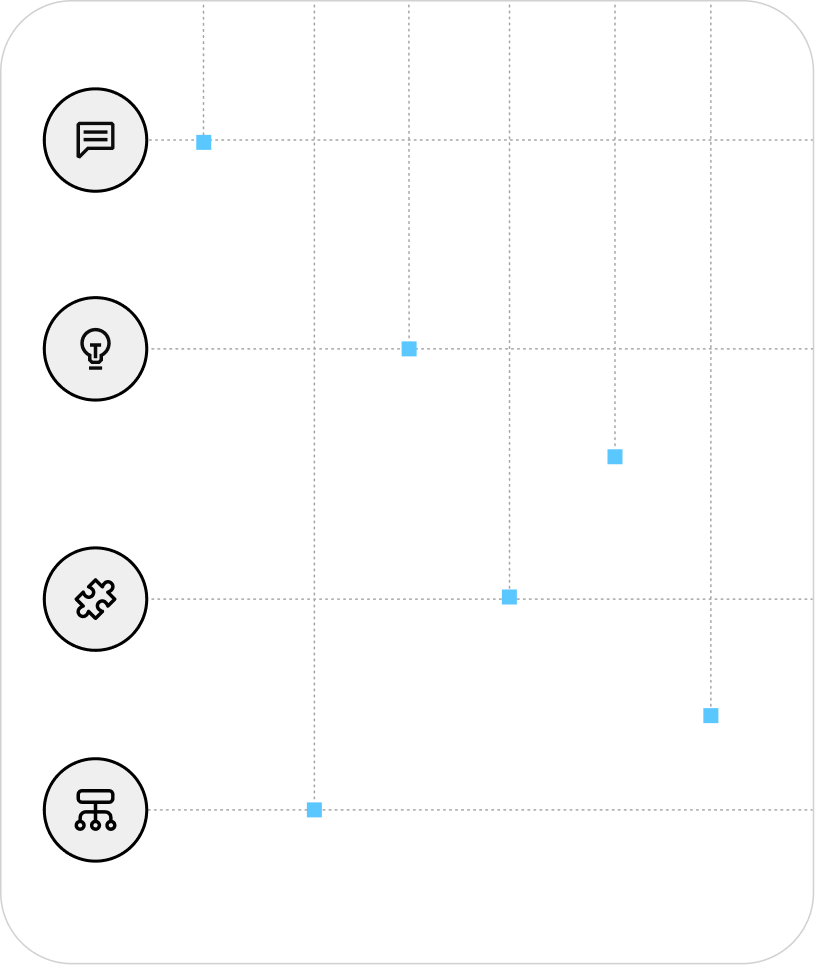
How Behavioral Agent Automation Platforms Work

Observable foundation


Pattern recognition

Automated discovery and deployment

Continuous improvement
Explore Behavioral Agent Automation
This isn't a product demo—it's a strategic discussion about how enterprises capture and act on the intelligence already flowing through their organizations.
If you're thinking about:
The gap between deploying AI and knowing what to automate
How behavioral observation can replace prediction in agentic deployments
What changes when infrastructure learns from work instead of waiting for prompts
Where enterprise agentic AI is going
Let's have a conversation.
Qualified prospects and curious minds both welcome.