Delta Dental of New Jersey and Connecticut is a health insurer that holds health and other sensitive client information. CIO and CISO Justin Lahullier chose Liminal for multi-model access, a security layer and an interface employees are comfortable using. Sensitive terms are masked before they reach a model and restored in the response, and teams across the company, executives included, now use it daily.
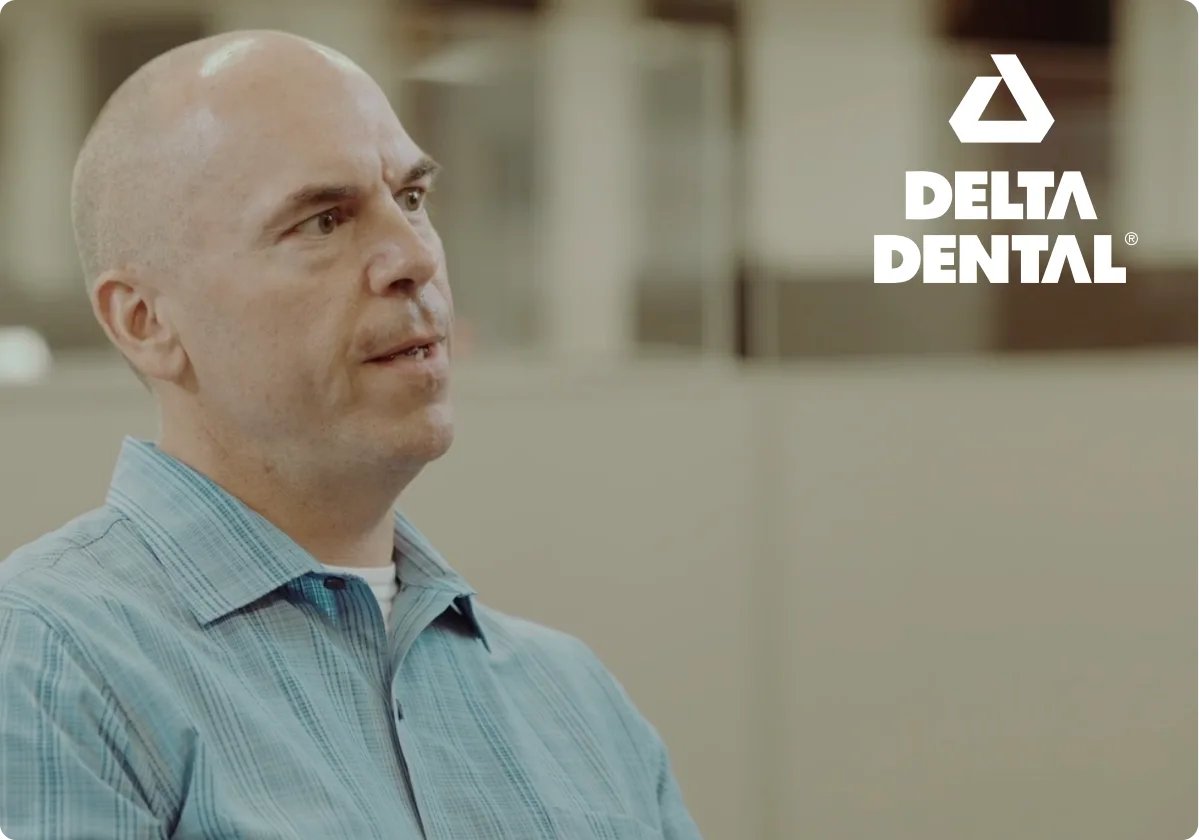
Having support for multiple models, having a layer around security, looking to make sure there's a good user interface that our folks will feel comfortable operating in, and then also looking at price point, we ultimately made the decision to move forward with Liminal.
My name is Justin Lahullier. I'm the Chief Information Officer and Chief Information Security Officer at Delta Dental of New Jersey and Connecticut. As a health insurer, we are a highly regulated company. We possess a lot of health information and other sensitive information. You read a lot of articles these days where even the AI companies that are saying they don't store the data or they don't use the data, they may be storing it, they may be using it. So for us, safe is making sure that our clients' data is protected and that we're abiding by our contractual obligations with those clients to make sure we're not using their data to train models, and that we're protecting it the same way we protect it today, regardless of the technology that we're using.
Having the additional layer of security with Liminal, you can verify as an administrator that that data is not making it to those models. So it's a great peace of mind for me.
I think some of the biggest challenges, or you could call them nightmares, I had early on in the process was knowing that AI was one of those technologies where I had the business coming to me and asking me about the technology. So I knew they were already using it, I knew they were going to use it. And so the most important thing for me was to build a safe environment for our users to experiment with the technology and understand it.
Having a low-friction experience for the end user to be able to go into the tool and use an intuitive user interface is important. Having Liminal, and being able to build in the ability to redact or to mask terms, or even warn users on terms they were sending into the models, was a big win-win for us. I think it gave us a lot of insight, and then also the comfort that when people did put it in, it would be basically cleaned up before being sent to the model. And the end user doesn't feel that pain. It's rehydrated on the way back out, so their experience remains intact, and we feel a lot more comfortable from a security perspective.
The moment that I knew this was kind of bigger than just an IT tool was when some of our senior executives started to engage in the tool, become regular users of the tool, and use it in their daily workflows. So I think that's a key item: the tool was driving value not just to IT, and it wasn't just a pretty shiny tool. It was a tool that people across the company, whether they were frontline users or they were an executive, were starting to come to on a regular basis and use for their daily workflow.
From an ROI perspective, it's mostly been in savings on time, which is more easy to measure. If something used to take you four hours and now it takes you 30 seconds, it's very easy to do an ROI calculation, and we have multiple examples of that. If I had to kind of take an average and say, what's the X factor on work saved, I would say 5x is probably a conservative number. We're seeing a 5x time improvement. And in many cases it's higher than that.
Engagement with partners for us is very important, and we look for partners, not vendors. I would describe that engagement from the beginning as a partnership. We definitely felt like we were being listened to about what we were looking for in a product. And we were probably a harder customer to satisfy because we already had an existing product in place. So a lot of our early conversations with Liminal were looking at feature parity between what we had on prem, what they had, and what they had in their roadmap to deliver, and it just spawned a great partnership where we worked consistently to both implement the product and enhance it. I feel very privileged to have a partner that listens to our needs, and I actually see it in the backlog and I see it delivered in the product as the new releases of Liminal are delivered.
Tell us about your team and we'll show you how Liminal fits your environment.
